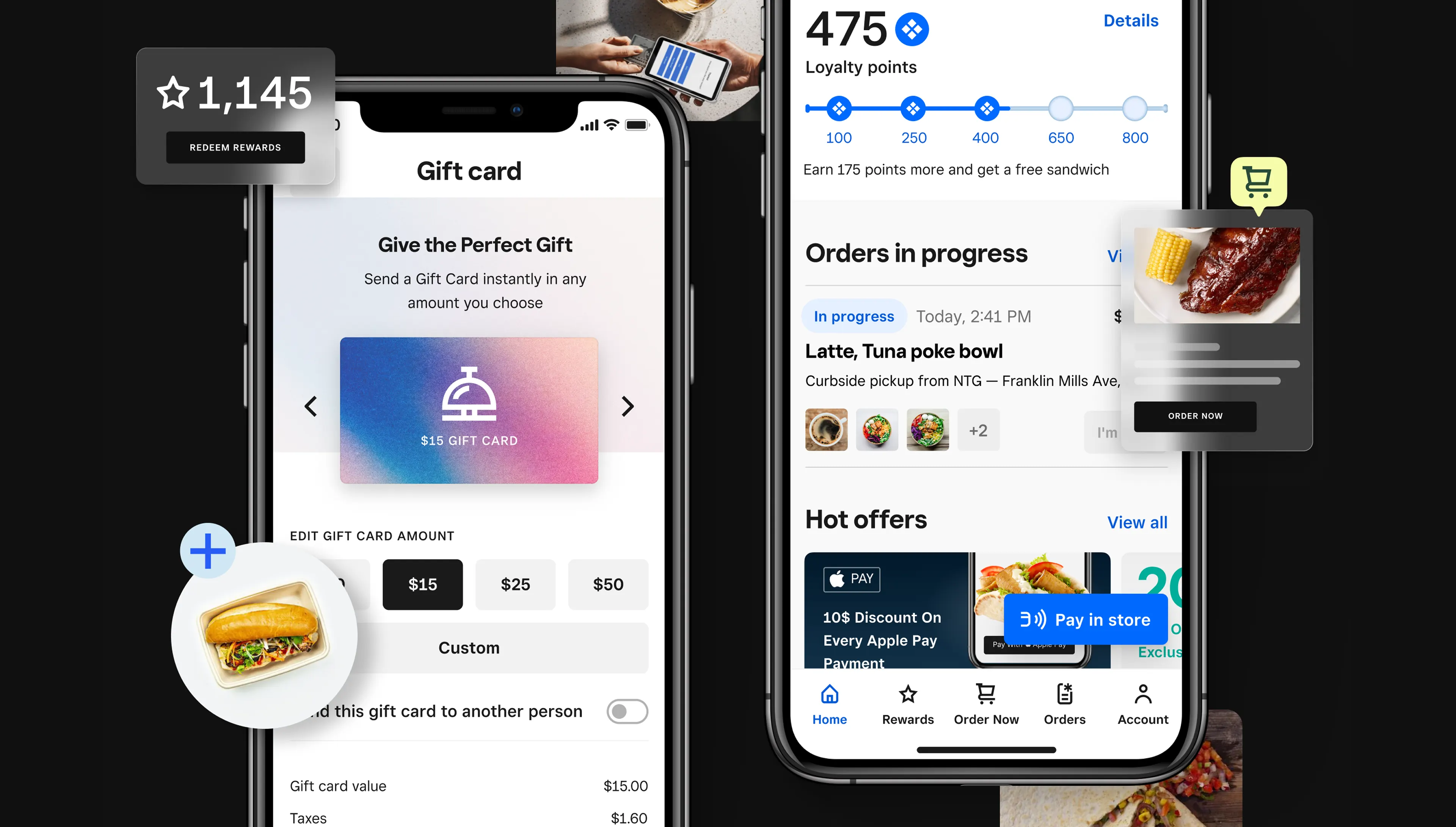
Rebuilding a Checkout That Was Losing ❚❚% of Orders
The checkout had devolved into a disjointed 7-step process, resulting in a 30%+ drop-off rate. My objective was to diagnose the structural failures and redesign a streamlined, high-converting flow while navigating a complex design system migration.
My approach
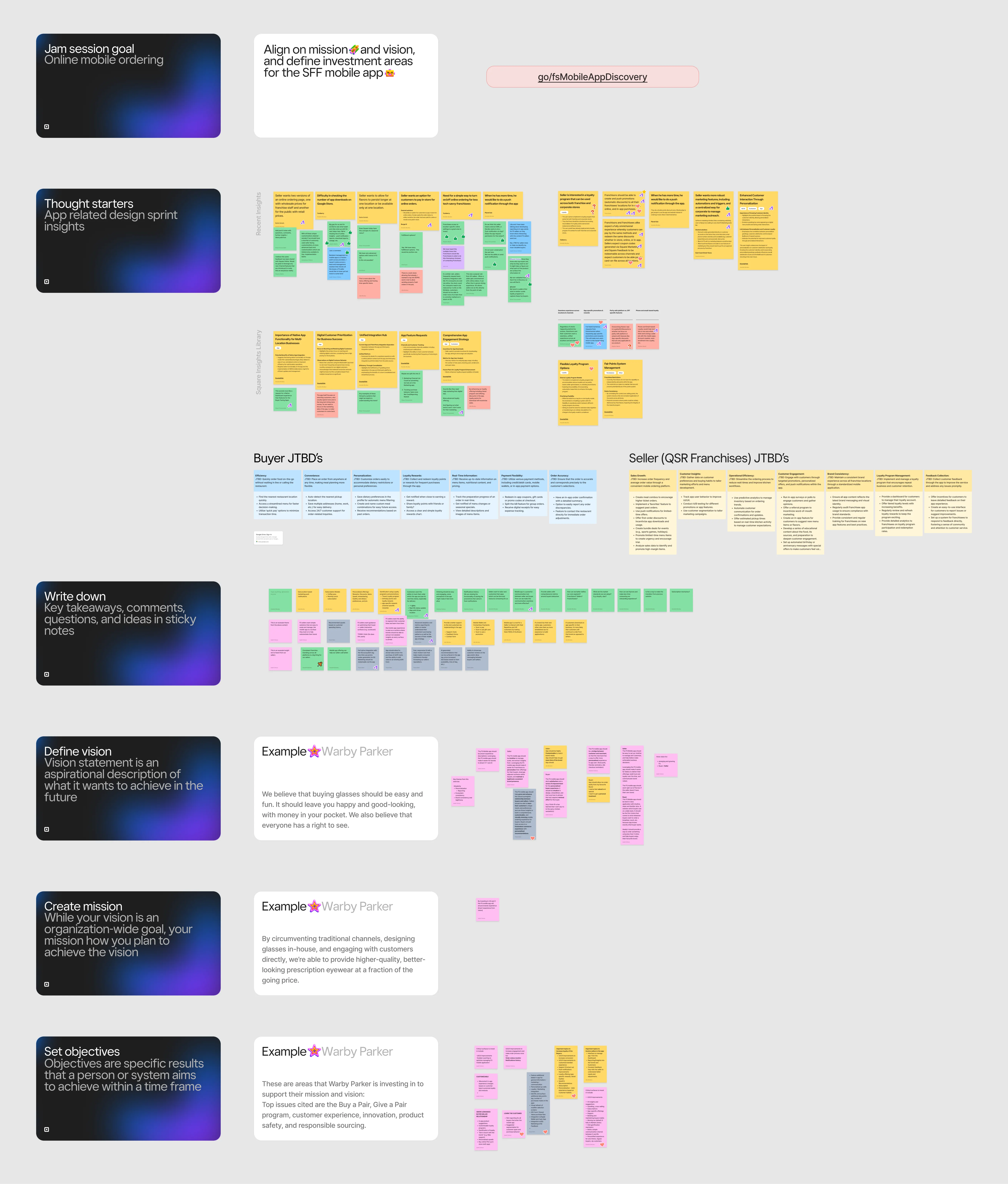
I initiated the project with a comprehensive flow audit rather than immediate UI exploration. I mapped every entry point—from promo banners to abandoned cart recovery—identifying where technical constraints were forcing unnecessary user decisions.
Key strategic moves:
- De-scoping: Negotiated with Product to eliminate redundant confirmation screens and legacy states.
- Gap Analysis: Conducted competitive benchmarking to align our patterns with industry leaders.
- System Reconciliation: Managed the friction of building new components within Square's Design System (DS) while simultaneously deprecating GoParrot's legacy patterns.
- Revenue Layer: Alongside the UX improvements, embedded mechanics that help restaurants grow — loyalty points, targeted upsells, order-history recommendations, and pre-filled data to reduce friction and increase repeat purchase rate.
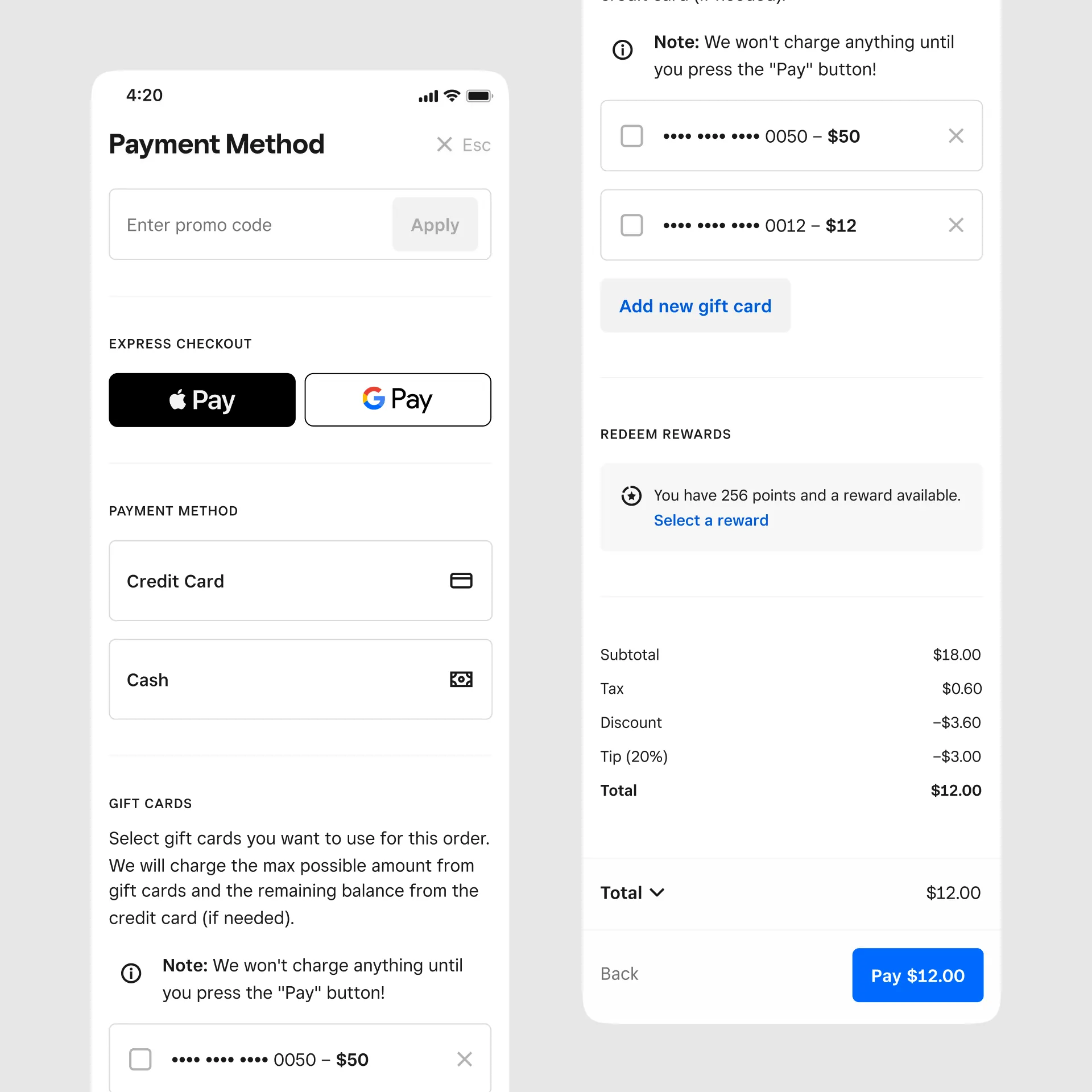
The Hardest Part: Reconciling two distinct product systems at both the UX and component levels, ensuring every decision followed Square's "grammar" before the official DS components even existed.
Reconciled two distinct product systems at both the UX and component levels
The Solution
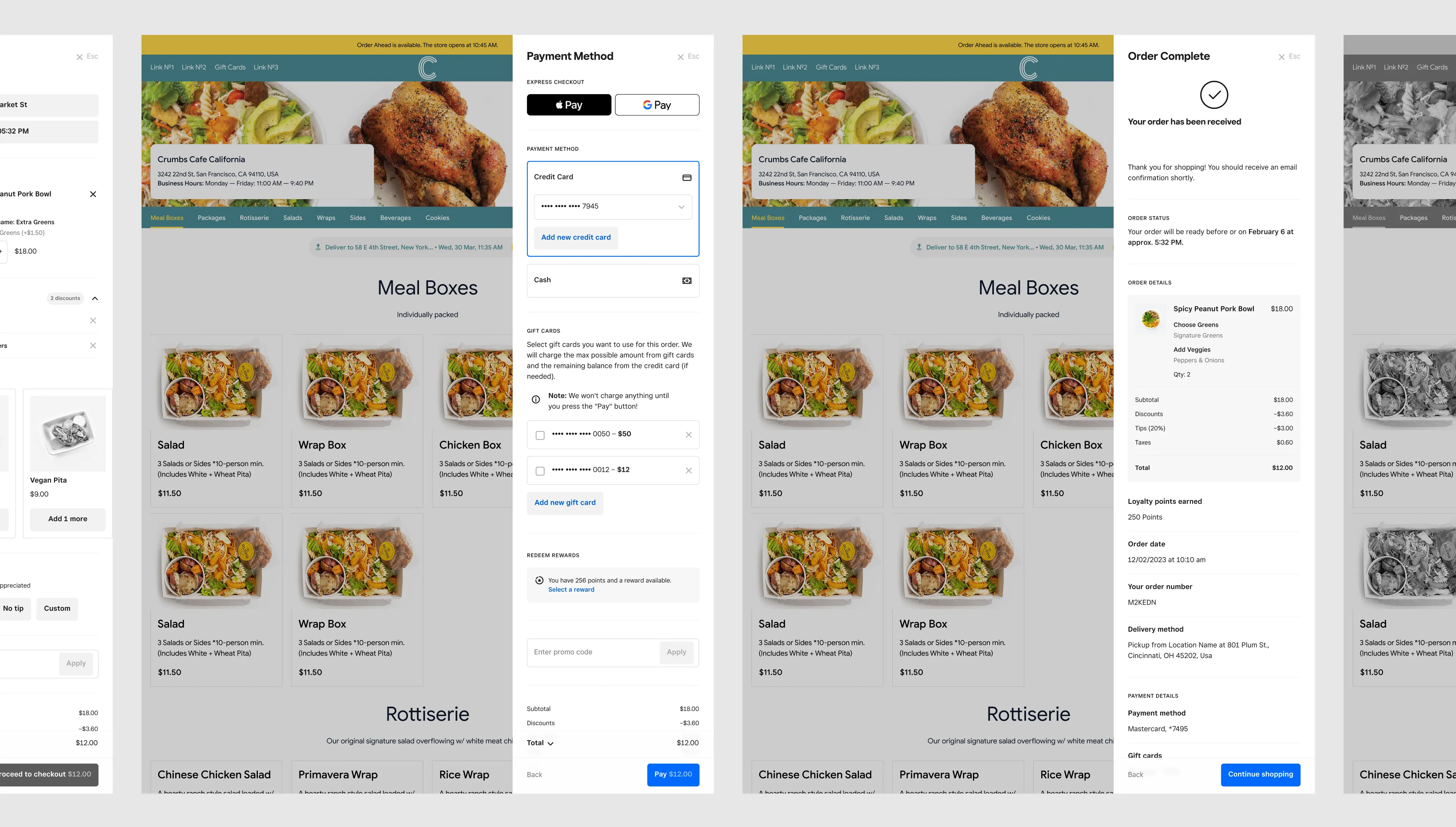
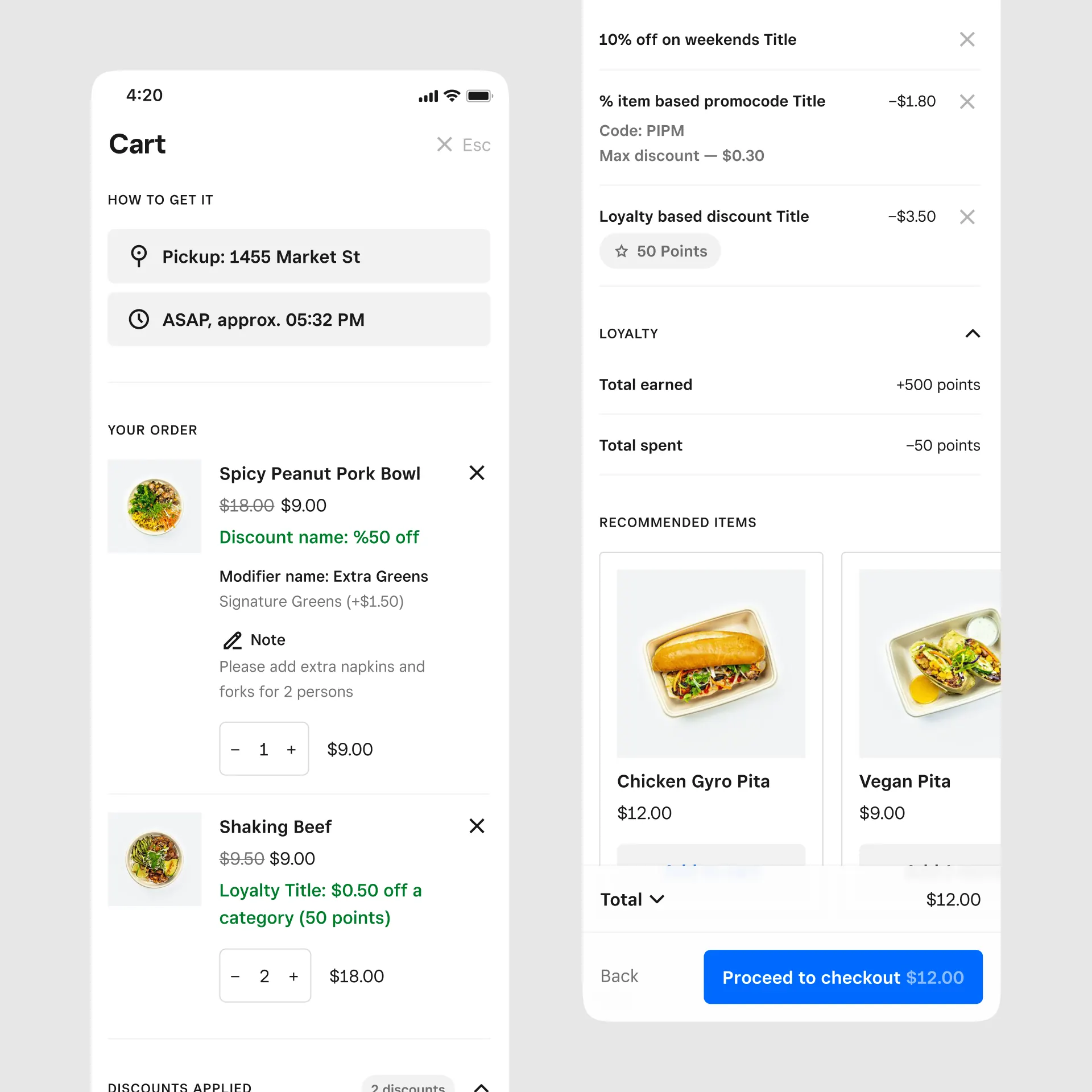
I collapsed the 7-step sequence into a streamlined 2-step flow, stripping away everything except legally required or conversion-critical actions.
Key features:
- Unified UI: Shipped a cohesive interface built on the new Square DS architecture.
- Simplified logic: Consolidated fragmented modals into a single, predictable path to purchase.
- Guest checkout: Introduced a frictionless entry point that directly addressed the primary documented drop-off cause.
Collapsed a 7-step sequence into a streamlined 2-step flow
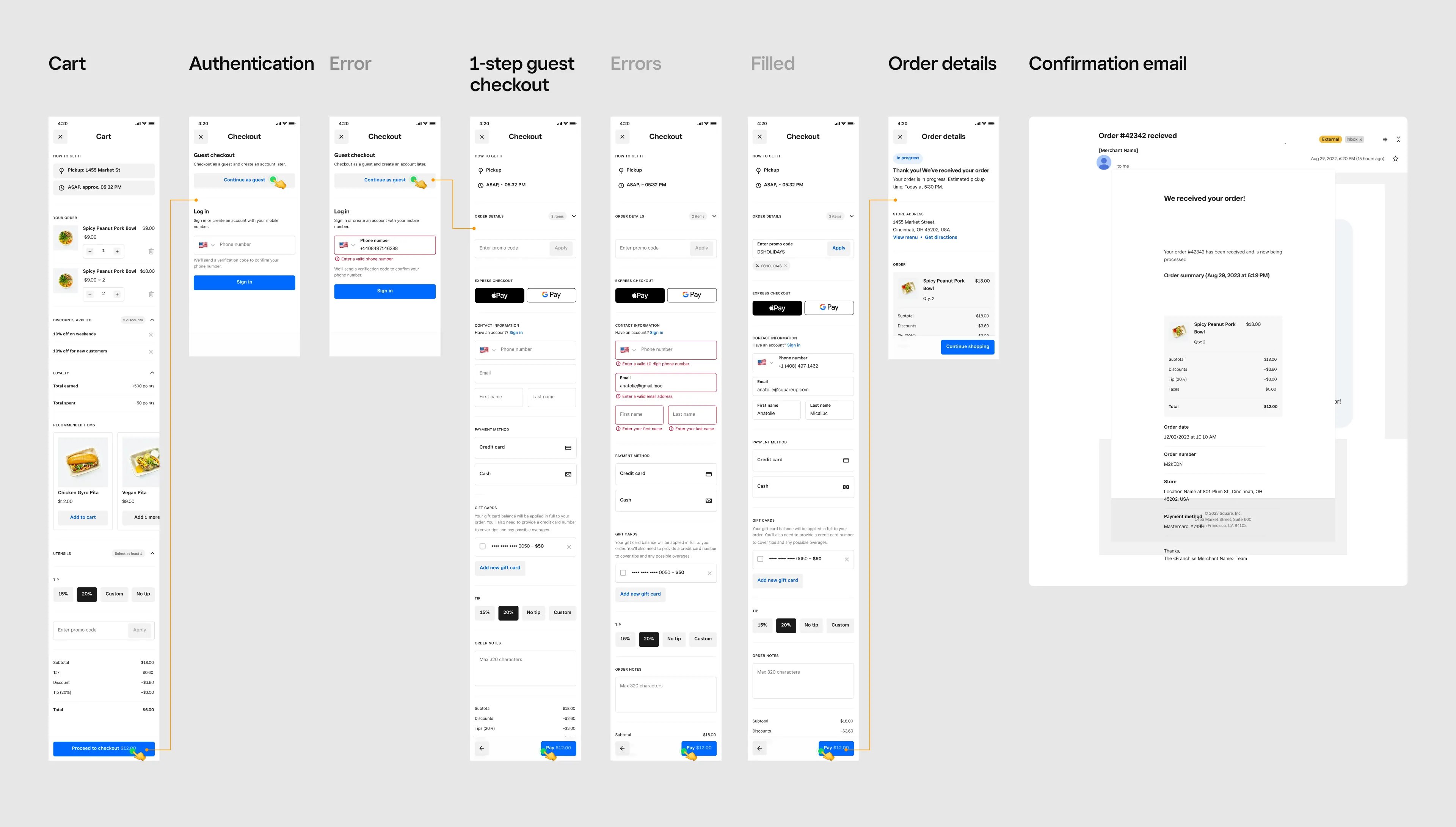
As part of this exercise we also introduced a new guest checkout flow, which reduced time to checkout by 57%.
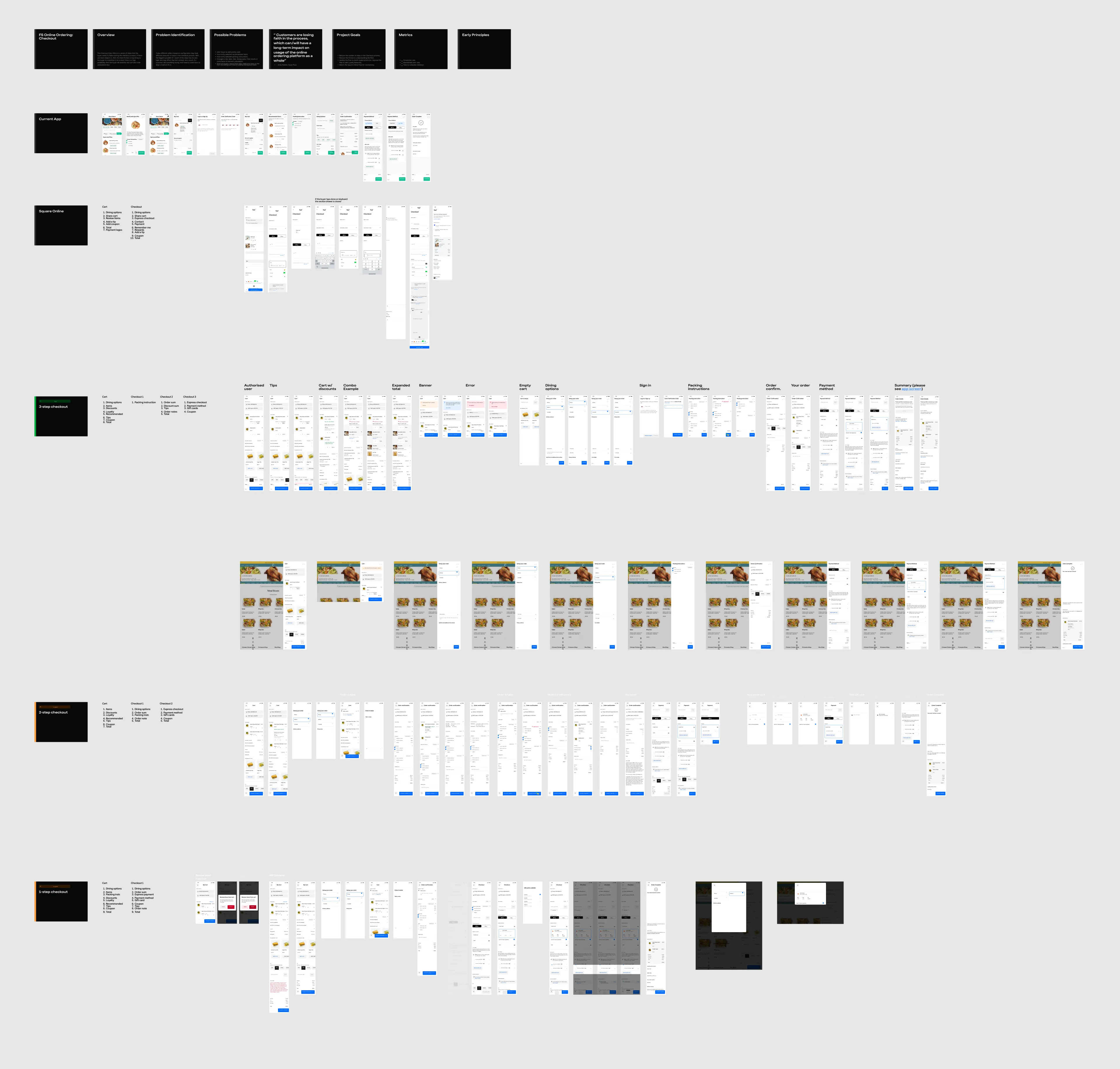
To make the transition smoother, we phased the rollout in two stages: first reducing checkout from 7 to 4 steps, then from 4 to 1.
Impact
This wasn't a "clean" redesign. It required operating across three simultaneous constraints: fixing a broken legacy flow, executing an active DS migration, and shipping non-existent components. Success meant balancing long-term scalability with the immediate need to ship.
➀ Checkout Completion: Up nearly ❚%
➁ Abandoned cart rate: Down ~❚❚%
➂ Time to complete: ~❚❚ seconds faster